So, you have a vision for a haircare brand. You’ve formulated the perfect scent profile in your head, designed the sleek packaging on paper, and mapped out the marketing strategy. But there is one critical decision that will make or break your business: choosing the right shampoo manufacturer.
In the beauty industry, your manufacturer is not just a vendor; they are your silent partner. The quality of your shampoo, the reliability of your supply chain, and the scalability of your business all hinge on this relationship.

With thousands of private label, contract, and OEM (Original Equipment Manufacturer) factories around the globe, how do you separate the industry leaders from the fly-by-night operators?
Here is a step-by-step guide to vetting and selecting the perfect shampoo manufacturer for your brand.
Step 1: Know Your Manufacturing Model
Before you start calling factories, you need to understand the three main types of manufacturing partnerships. The right one depends on your budget, expertise, and creative control.
1. Private Label (Stock Formulas)
This is the fastest route to market. The shampoo manufacturer already has a catalog of pre-developed formulas. You pick a base (e.g., “Volumizing Shampoo”), choose a scent, and slap your label on it.
- Pros: Low minimum order quantities (MOQs), fast turnaround, no R&D costs.
- Cons: Low differentiation; competitors may be selling the exact same formula under a different name.
2. Contract Manufacturing (Custom Formulas)
You bring a concept (or a proprietary formula) to the manufacturer, and they develop it for you. This is ideal for brands that want unique selling points (USPs) like “vegan collagen complex” or “patented probiotic technology.”
- Pros: Full control over ingredients, unique branding, higher profit margins.
- Cons: Higher MOQs, longer development time (6–12 months), higher upfront costs.
3. Hybrid (Semi-Custom)
Many top-tier manufacturers now offer a hybrid model. They take a base formula but allow you to modify it with exclusive active ingredients or specific fragrance houses.
- Pros: Balance between speed and uniqueness.
- Cons: Still limited by the manufacturer’s existing infrastructure.
Step 2: Evaluate Certifications and Compliance
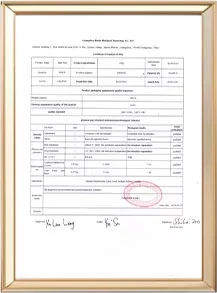
If a shampoo manufacturer cannot produce documentation proving their compliance, walk away. In the haircare industry, safety is non-negotiable.
Look for these non-negotiables:
- GMP (Good Manufacturing Practices): This is the baseline. It ensures the facility is clean, staff are trained, and processes are validated.
- ISO 22716: This is the international standard specifically for cosmetics. If a manufacturer has this, it means they have rigorous quality management systems in place.
- FDA Registration (if in the US): While the FDA does not “approve” cosmetics, manufacturers must register their facilities.
- Cruelty-Free & Vegan Certifications: If your brand markets to ethical consumers, ensure the manufacturer can provide certified cruelty-free manufacturing (no animal testing).
- Clean Beauty Standards: If you are targeting the “clean” market, confirm they have banned substances lists (like no parabens, sulfates, or phthalates) and can provide preservative efficacy testing.
Step 3: Assess Their R&D Capabilities
Formulating shampoo is a complex chemical process. It’s not just about mixing nice-smelling oils. A good shampoo must have the right viscosity, pH balance (usually between 4.5 and 5.5), preservative stability, and cleansing power without stripping the scalp.
When interviewing a shampoo manufacturer, ask these R&D questions:
- Do you have a cosmetic chemist on staff, or do you outsource? (You want in-house chemists).
- What is your stability testing protocol? They should be able to prove the shampoo won’t separate, change color, or grow bacteria after 1, 3, and 12 months.
- Can you perform challenge tests? This tests the preservative system to ensure it won’t develop mold or yeast after being opened by the customer.
- How do you handle fragrance allergies? Can they provide IFRA (International Fragrance Association) certificates to ensure the fragrance is safe for use?
Step 4: Supply Chain and Sourcing Transparency
In the post-pandemic economy, supply chain resilience is everything. The best formula in the world is useless if the shampoo manufacturer can’t source the raw materials.
- Sourcing: Does the manufacturer source ingredients globally or locally? If a key ingredient like Cocamidopropyl Betaine is suddenly scarce, how do they handle substitutions? Will they notify you?
- Lead Times: What is the current lead time from order to fulfillment? (Standard is usually 4–8 weeks for private label; 12–20 weeks for custom).
- Backup Plans: Do they have backup suppliers for critical raw materials to prevent production halts?
Step 5: MOQs and Scalability
Minimum Order Quantities (MOQs) are usually the biggest barrier to entry for new brands.
- Startups: Look for a shampoo manufacturer with low MOQs (e.g., 500–1,000 units per SKU). Some manufacturers specialize in “indie” brands and offer MOQs as low as 50 units, though the cost per unit will be significantly higher.
- Growth Stage: As you scale, you need a manufacturer that can grow with you. A factory that caps out at 10,000 units per run is useless if you land a major retailer like Sephora or Ulta requiring 50,000 units overnight.
- Ask: “What is your maximum capacity per month?” and “Can you handle multi-SKU (Stock Keeping Unit) expansion?”
Step 6: Packaging and Filling Capabilities
Shampoo manufacturing is actually two processes: making the liquid (compounding) and putting it in the bottle (filling).
- In-House vs. Outsourced: Does the manufacturer handle packaging and labeling in-house? If they outsource the bottling to a third party, you introduce another variable for error (mislabels, damaged bottles).
- Automation: Automated filling lines are faster and more sanitary than manual labor.
- Types of Packaging: Can they handle airless pumps, aluminum tubes, PET plastic, or post-consumer recycled (PCR) materials? If sustainability is your brand pillar, ensure they have experience with eco-friendly packaging without leaking or jamming the lines.
Step 7: The Power of the “Trial Run”
Never sign a long-term contract based on a brochure or a Zoom call. Always do a trial run.
- Request Samples: Get samples of their existing stock formulas. Test them on different hair types (curly, straight, colored, damaged).
- Pilot Batch: If going custom, pay for a pilot batch (usually 50–100 units). Use this to test the market, but also to test the manufacturer’s accuracy.
- Did the color match the Pantone swatch?
- Was the viscosity exactly as specified?
- Did they ship on time?
Step 8: Communication and Cultural Fit
You will be speaking to your shampoo manufacturer more than your business partners during the launch phase. Communication breakdowns lead to misprints, delayed launches, and lost revenue.
- Account Manager: Will you have a dedicated account manager, or are you a number in a queue?
- Time Zones: If you are manufacturing overseas (e.g., US brand working with a factory in South Korea or China), how do they handle communication? Is there a US-based liaison?
- Language: Ensure technical documents (Certificates of Analysis, Material Safety Data Sheets) are available in your native language for customs and regulatory filing.
Step 9: Domestic vs. Overseas Manufacturing
This is the classic debate.
| Criteria | Domestic (USA/Europe) | Overseas (Asia/India) |
|---|---|---|
| Cost | Higher cost per unit | Lower cost per unit |
| MOQs | Lower MOQs (1k–5k units) | High MOQs (10k+ units) |
| Shipping | Fast (1–2 weeks) | Slow (4–8 weeks by sea) + customs clearance |
| Communication | Easy, same time zone | Requires translation, time zone management |
| IP Protection | Strong legal protections | Varies; you must secure trademarks before sharing formulas |
If you are a startup with limited capital, domestic manufacturing is often safer to manage cash flow and inventory, despite the higher per-unit cost. If you are scaling to mass retail, overseas manufacturing offers the scale and cost-efficiency to compete on price.
Red Flags to Watch Out For
When vetting a shampoo manufacturer, run away if you encounter these:
- No phone number or physical address: If they are just a mailbox service, they likely outsource everything.
- Refusal to share certificates: If they say “trust us, we are GMP certified” but won’t show the certificate, they aren’t.
- Vague pricing: Manufacturers who hide “mixing fees,” “storage fees,” or “setup fees” until the final invoice are unethical.
- Promising the world: If a manufacturer says they can do an ultra-complex, fully custom formula with an MOQ of 100 units in two weeks, they are lying. Quality takes time and volume.

Conclusion
Choosing a shampoo manufacturer is a strategic decision that defines your brand’s identity. The cheapest option might cost you in quality control and customer reviews. The fastest option might lock you into a generic formula that doesn’t deliver results.
Take your time. Order samples from at least three different manufacturers. Visit the facility if possible, or hire a third-party auditor to do it for you. Ask for client references and call them.
Your shampoo is the product your customers will use in the shower every day. It’s an intimate experience. By partnering with a manufacturer who values quality, transparency, and innovation, you ensure that every wash leaves a lasting impression—and brings customers back for more.
Let’s Talk – Get Personal Guidance on WhatsApp
Finding the right manufacturing partner can feel overwhelming, especially when you’re juggling formulas, MOQs, and compliance. I’ve helped dozens of haircare founders navigate this process, and I’d love to help you too.
Have specific questions about your product concept?
Want a quick sanity check on a manufacturer you’re considering?
Reach out to me directly on WhatsApp. I’ll personally review your situation and point you in the right direction—no strings attached.
👉 Click here to chat with me on WhatsApp: WhatsApp
Or scan the QR code below (if applicable).