New to sourcing from a factory? This OEM buying FAQs page answers the questions every first-time shampoo or mask buyer asks — MOQ, lead time, certifications, pricing, IP, and the gotchas that surprise people. Bookmark it before you brief a partner, because the answers shape both your budget and your launch timeline.
MOQ (Minimum Order Quantity)
What is a typical MOQ for shampoo or mask OEM? Often 500–1,000 units on stock packaging; custom tooling raises it. Stock jars and bottles let a factory amortize setup across many clients, which is why they accept lower minimums. Our low MOQ vs bulk guide shows how order size moves unit cost.
Can I start below 500 units? Some factories accept smaller pilots, but per-unit cost rises sharply and many plants simply will not run a line for less. Five hundred is a common floor for viable pricing; below it, you are often paying prototype rates.
Does MOQ differ by format? Yes. Oils and serums in glass often carry higher minimums because of filling-line setup; masks in heavy jars sit in the 1,000–3,000 range on stock components. Shampoo in standard bottles is usually the most flexible.
Lead Time
How long from brief to delivery? Sampling 2–4 weeks; pilot production 2–4 weeks; bulk 4–8 weeks depending on actives and packaging. Our Guangdong launch story shows a real 2–3 month arc from first brief to sellable stock.
What delays lead time most? Custom packaging tooling and actives that need sourcing or maturation — oils especially (see our China hair oil OEM guide). Fragrance development and stability re-runs also push dates when they start late.
Can I compress the timeline? Partly. Using stock packaging, locking fragrance early, and testing stability on a scaled batch all save weeks. Custom tooling and late spec changes are the two things that reliably blow the schedule.
Certifications
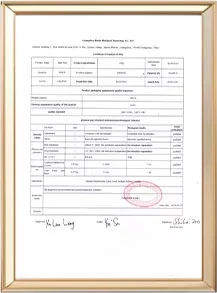
Which certs matter? GMP and ISO 22716 are baseline for cosmetics manufacturing. Market-specific rules then apply: the EU needs 1223/2009 compliance with a responsible person; the US needs MoCRA registration. Vegan and COSMOS help premium and DACH channels (our Kaviarprotein guide covers the German angle).
Does the factory supply certs per shipment? A reliable partner does — insist on documentation at signing and per batch, not just once. A single certificate from a year ago proves nothing about the lot on today’s truck.
Do not treat certification as a one-time checkbox. Retail buyers re-audit, and a lapsed COSMOS or vegan certificate can pull a product from a shelf mid-season. Build renewal dates into your calendar and confirm the factory’s own certificates remain current, since their lapse can invalidate yours.
What import docs do I need? Certificates of analysis, MSDS, ingredient origin letters, and market-specific notifications. Build these into the brief so they are not a surprise at customs.
Pricing & IP
How is pricing quoted? Usually per-unit ex-works, excluding freight and duty. Always ask for a full landed-cost view, because the ex-works number hides the ocean freight, tariff, and last-mile costs that decide whether the SKU is actually profitable.
Who owns my formula? With OEM, you should — get it in writing. ODM bases are the factory’s and may be sold to your competitor. Our OEM vs ODM guide explains the trade-off in detail, and the IP clause is the line you do not compromise on.
Can I protect against the factory reselling my product? Contractual exclusivity and a written formula-ownership clause are the tools. Exclusivity has a cost, but for a differentiated hero SKU it is usually worth it.
What payment terms are normal? A typical structure is 30% deposit to reserve the line and 70% against finished-goods inspection or before shipment. Avoid paying 100% upfront, and tie the final payment to a pre-shipment QC pass so you keep leverage if the batch fails spec.
Quality Control
What QC should I require? Stability, microbial, viscosity, active assay, and fill-accuracy checks. Our plant-cost case study shows why in-line QC protects you from a bad batch reaching customers and triggering returns.
Should I visit the line? For a first serious order, yes — or use a third-party inspection at the pre-shipment stage. A 48-hour hold on the first pallet, as we describe in the caviar mask launch, catches line-specific defects before the whole run ships.
Common Mistakes First-Timers Make
- Accepting verbal IP or ownership assurances instead of getting them in writing.
- Ignoring landed cost and discovering the SKU is unprofitable only after freight and duty.
- Skipping per-batch certificates and getting burned at customs or on a complaint.
- Commissioning custom tooling before demand is proven, locking capital into a mould.
- Treating ex-works price as the real price and mis-budgeting the launch.
Each of these mistakes is recoverable individually but compounding in practice — a missed certificate and an unwritten IP clause together can sink a launch that was otherwise well formulated.
FAQ
What is the minimum order quantity for OEM shampoo? Typically 500–1,000 units on stock packaging; custom tooling raises the floor. Oils and heavy jars often sit higher, while standard shampoo bottles are the most flexible format.
How long does OEM production take? Roughly 2–3 months from brief to pilot launch, longer for custom packaging or bulk runs that need tooling, maturation, or extra stability work.
Which certifications should my OEM partner have? GMP and ISO 22716 at minimum, plus market-specific compliance (EU 1223/2009, US MoCRA) and any premium badges your channel needs, such as vegan or COSMOS.
Who owns the formula in an OEM agreement? You should, in writing — ODM formulas belong to the factory. The IP clause is the non-negotiable line, especially for a differentiated hero SKU.
What QC checks protect a first-time buyer? Stability, microbial, viscosity, active assay, and fill-accuracy, plus a pre-shipment inspection or a first-pallet hold to catch line-specific defects before the full run ships.
Conclusion & Next Step
These OEM buying FAQs cover the fundamentals, but every brief is specific. The pattern across all of them is the same: get commitments in writing, price to landed cost, and require per-batch proof. Ready to turn questions into a real order? Explore Guangdong OEM capabilities on our sister site, and pair this with our anti-hair loss, hair mask cost, and gold caviar guides.
Explore our manufacturing network
Looking beyond this guide, our sister sites cover complementary angles:
- Hair Care Routine FAQs: Answered by a Formulation Team — on our custom shampoo manufacturing site (theshampoomanufacturer.com)
- International Buyer FAQs: Shipping, Certs, Samples — on our Guangzhou shampoo factory site (guangzhoushampoo.com)