The anti-hair loss / anti-thinning shampoo category is one of the most searched, most misunderstood, and most lucrative niches in hair care today. The global hair loss products market was valued at roughly $11.8 billion in 2026 and is on track to reach nearly $24.8 billion by 2035, growing at an estimated ~8.6% CAGR. Within that, shampoo is the everyday entry point—the product consumers buy first, use most often, and repurchase most predictably.
But here’s the hard truth: most new anti-hair loss shampoo brands fail—not because the demand isn’t real, but because they rush the foundation: weak positioning, copy-paste formulas, non-compliant claims, and the wrong manufacturing partner.
This guide walks you through exactly how to start an anti-hair loss shampoo brand the right way—from idea to shelf-ready product—using the OEM/ODM model that almost every successful indie and mid-size brand relies on.
Quick Roadmap: The 8 Steps
| Step | What You’ll Do |
|---|---|
| 1 | Validate the niche & pick a specific angle (don’t just sell “hair growth”) |
| 2 | Define your target customer and price tier |
| 3 | Choose your product strategy: Private Label vs. Semi-Custom vs. Full OEM |
| 4 | Pick the right actives & formula architecture (and what to avoid) |
| 5 | Handle regulatory & claim compliance beforeyou design packaging |
| 6 | Partner with a qualified OEM/ODM manufacturer (with the right certifications) |
| 7 | Design packaging that feels premium but stays practical |
| 8 | Launch, collect data, then scale into conditioners, serums, or bundles |
Let’s break each one down.
Step 1 — Pick a Specific Angle (Not Just “Hair Growth”)
“Hair growth shampoo” is one of the most saturated keyword spaces on the internet. If your entire value proposition is “our shampoo grows hair,”you’re competing with drugstore giants and clinical brands with seven-figure ad budgets—with zero differentiation.
Instead, win by narrowing the problem. Successful anti-hair loss sub-niches in 2026 include:
| Angle | Why It Works | Example Positioning |
|---|---|---|
| Scalp-first / microbiome-friendly | Positions you as science-backed, not gimmicky | “Cleanse without stripping. Support the scalp environment hair needs to thrive.” |
| Thinning from breakage / weak strands | Legally safer claims; visibly measurable results | “Reduce breakage-related thinning. Strengthen the strand from root to tip.” |
| Oil-control + follicle congestion | Solves a root cause many ignore | “Unclog scalp buildup. Rebalance sebum so hair isn’t suffocated.” |
| Postpartum / hormonal thinning | Deeply emotional, underserved audience | “Gentle, hormone-safe daily care for postpartum hair changes.” |
| Men’s DHT-aware care | Clear demographic; high brand loyalty | “Daily shampoo formulated for men’s thinning-prone hair. Saw palmetto + caffeine.” |
| Clean beauty / plant-forward | Rosemary, tea tree, botanicals with strong consumer pull | “Rosemary-led scalp care. No sulfates, no parabens, no empty promises.” |
🔑 The winning formula: Specific problem × credible mechanism × compliant language.
Not: “Regrows hair overnight.”
Step 2 — Define Your Target Customer & Price Tier
Your formula, bottle, and marketing all flow from who you’re selling to. Get specific:
Questions to answer before touching a formula:
- Men, women, or both? Age range?
- Is this for everyday drugstore (8–14 retail) or premium / salon-inspired (22–45 retail)?
- Where will they buy—Shopify/DTC, Amazon, salon shelves, or TikTok impulse buys?
- What’s the #1 frustration they already have? (Oily scalp but dry ends? Shedding after pregnancy? Fine flat hair that looks thinner than it is?)
Ballpark Cost Structure (for planning)
| Cost Layer | Indie / Mid-Size Range |
|---|---|
| Bulk shampoo (formula + actives) | 1.20–3.50 / unit (depends on actives & volume) |
| Bottle + pump/cap + label + box | 0.60–2.50 / unit |
| Total landed (ex-factory) | ~2.50–6.50 / unit |
| Typical retail price | 3×–5× ex-factory (DTC can go higher) |
These are rough ranges. Your actual numbers depend on actives, packaging choices, and order volume (MOQ).
Step 3 — Choose Your Product Strategy: PL vs. OEM vs. ODM
Unless you’re a cosmetic chemist with a mixing tank, you’ll build this through a manufacturer. There are three common paths:
Path A: Private Label (Fastest / Lowest Risk)
You pick a proven, already-mastered anti-thinning or scalp-care base formula from the factory’s library. You customize branding, fragrance intensity, color, and label.
- ✅ Fastest to market (often 25–35 days)
- ✅ Lower MOQ (often 1,000–3,000 pcs/SKU)
- ✅ Cheapest entry point
- ⚠️ Less unique on paper—though the experiencecan still feel premium
Path B: Semi-Custom ODM (The Sweet Spot for Most Brands)
Start with a proven base, then upgrade:
- Increase % of key botanicals (rosemary, saw palmetto, tea tree…)
- Add / adjust actives (caffeine, niacinamide, zinc pyrithione, panthenol)
- Customize fragrance signature
- Select from an expanded bottle catalog
- MOQ typically 3,000–5,000 pcs/SKU
Path C: Full Custom OEM (Maximum Differentiation)
Ground-up R&D: you (or the factory’s chemists) design the surfactant system, active blend, texture, and sensorial profile from scratch. Often includes custom-mold bottles.
- ✅ Truly proprietary feel
- ⚠️ Higher MOQ (5,000–10,000+ pcs/SKU)
- ⚠️ Longer R&D timeline (sampling, stability, compatibility)
💡 Most smart founders start at Path A or B, prove repeat orders, then graduate to Path C once revenue justifies it.
Step 4 — The Formula: What Actually Goes In (And What to Watch)
The Core Architecture of a Good Anti-Hair Loss Shampoo
A credible formula is never just “herbal extract + surfactant.” It needs three layers working together:
① Gentle Cleansing System (the foundation)
Harsh sulfates (SLES/SLS) can irritate sensitive scalps and fuel the cycle of inflammation and shedding. Modern anti-thinning lines lean toward:
- Sulfate-free blends: Sodium cocoyl isethionate, disodium laureth sulfosuccinate, decyl glucoside, cocamidopropyl betaine
- Amino-acid-based surfactants for a more luxurious, skin-care-meets-scalp feel
② Scalp-Targeted Actives & Botanicals
Common, credible inclusions:
| Ingredient | Why Brands Use It |
|---|---|
| Caffeine | Topical interest for follicle energy/metabolism signaling; familiar to consumers |
| Rosemary leaf extract / rosmarinic acid | The “golden botanical” of 2026—strong front-label appeal, scalp-circulation association |
| Niacinamide (Vitamin B3) | Scalp barrier support, anti-inflammatory |
| Saw Palmetto Extract | Traditional inclusion for DHT-aware positioning |
| Zinc Pyrithione / Piroctone Olamine | When dandruff/inflammation is part of the thinning picture (microbiome angle) |
| Panthenol (Pro-Vitamin B5) | Strand-level strengthening = less breakage = looksthicker |
| Biotin (surface-level claim nuance) | More marketing-power than follicular magic—but excellent for label appeal when used honestly |
| Salicylic Acid (0.3–0.5%) | Gentle exfoliation, oil-control, follicle-decongestion |
③ Strand Reinforcement (because breakage mimics loss)
- Hydrolyzed silk/wheat/soy protein
- Ceramides or ceramide-like emollients
- Lightweight conditioning agents that don’t coat the root
⚠️ The “Avoid” List (Consumer Expectations in 2026)
- Harsh SLES/SLS overloads
- Unnecessary parabens (use modern preservation systems instead)
- Heavy silicones that build up and weigh down fine hair
- Hormone or steroid actives sneaked in “for results” ← this is a regulatory landmine
Step 5 — Regulatory & Claims: The Part Most Brands Get Wrong
This step can make or break your brand legally. The anti-hair loss space is one of the most heavily scrutinized categories by regulators because of how easy it is to cross the line.
The Golden Rule: Cosmetics vs. Drugs
| Your Product | Regulator View | What You Can / Can’t Say |
|---|---|---|
| Cosmetic shampoo (rinse-off, no drug actives like minoxidil) | FDA regulates as a cosmetic (US) | ✅ Cleanses scalp, removes buildup, reduces breakage, supports fuller-looking hair, strengthens strands❌ Cannot claim to treat, cure, or restore hair growthas a medical outcome |
| Contains minoxidil or makes drug-level claims | Becomes an OTC drug | Requires full drug-GMP, drug labeling, monograph compliance—entirely different beast |
In plain English:
Your shampoo can be fantasticat creating the optimal scalp environment and reducing the appearanceof thinning by stopping breakage and congestion—but the moment you say it “treats alopecia” or “regrows hair” with medical certainty, you’ve left cosmetics and entered drug enforcement territory.
📌 Smart positioning language that sells andstays compliant:
- “Helps reduce breakage for fuller-looking hair”
- “Supports a balanced, clarified scalp environment”
- “Gently cleanses congested scalps so hair isn’t suffocated”
- “Strengthens thinning-prone strands against daily stress”
Label must-haves (US/EU-minded):
- INCI ingredient list (descending order)
- Net weight
- Manufacturer / distributor name & address
- Usage instructions + “For external use only”
- Batch/lot code & PAO or expiry guidance
- MSDS/SDS + COA from the factory
Step 6 — Choosing the Right OEM/ODM Manufacturing Partner
Your factory isn’t just a vendor. In this category, they’re half your R&D department. Vet them like a co-founder.
Non-Negotiable Checklist
| Criteria | Why It Matters |
|---|---|
| GMPC / ISO 22716 certification | Baseline proof of hygienic, audited cosmetic manufacturing |
| In-house R&D chemists | You want formulators, not just “blenders of bought base” |
| Anti-thinning formula library | Proven bases = lower risk, faster launch |
| Stability & micro testing capability | Heat/cool cycles, microbes, pH, viscosity tracking |
| Compliance support | MSDS, COA, ingredient INCI, export docs (CPNP for EU, etc.) |
| MOQ flexibility | Can they start you at 1k–3k for v1? |
| Transparent quoting | No mystery fees buried in “filler” lines |
Why Brands Work with Qianlan Shampoo Factory
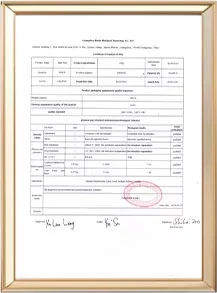
Qianlan is a leading shampoo OEM/ODM manufacturer operating from a 120,000 m² GMPC-certified industrial park in Guangzhou with 14+ automated production lines and capacity exceeding 2 million units/month. For anti-hair loss / scalp-care brands specifically, Qianlan offers:
- ✅ 10,000+ mastered formulations—including proven scalp-care and anti-breakage bases you can private-label immediately
- ✅ Semi-custom & full custom R&D—adjust caffeine %, rosemary extracts, botanical blends, fragrance signatures, and surfactant mildness
- ✅ MOQ tiers designed for real brands—from startup trial runs (~1,000 pcs) to volume scale
- ✅ Turnkey support—bulk production → filling → capping → labeling → carton packing → export documentation
- ✅ Quality system you can point to—GMPC + ISO 22716-aligned processes, COA per batch, microbial & stability discipline
Bottom line: You bring the brand vision and the customer insight. Qianlan brings the tanks, the chemists, the compliance backbone, and the scalable lines to make it real.
Packaging does 80% of the selling before the customer ever pumps the bottle.
Smart Choices for Anti-Thinning Shampoo
| Element | Recommendation |
|---|---|
| Bottle | PET (recyclable) in 250ml / 300ml / 500ml; matte-finish or soft-touch for premium feel |
| Pump vs. disc-top | Pump = higher perceived value; disc-top = lower cost & less leakage risk in shipping |
| Label | Waterproof BOPP; minimalist typography + one bold ingredient visual (rosemary sprig, caffeine molecule, etc.) |
| Outer box | Optional—adds unboxing value but raises cost; FSC cardboard if you go that route |
| Sustainable angle | PCR-content PET or refill messaging for 2026-conscious buyers |
Packaging trap to avoid: Don’t blow your whole budget on a custom bottle mold in v1. Use a stock bottle from the factory’s catalog, and put your differentiation into the formula + label + story. Upgrade the mold once you’ve validated demand.
Step 8 — Launch, Prove, Then Expand Into a System
An anti-hair loss shampoo brand is strongest when it becomes a regimen, not a one-off bottle.
The Recommended Launch Sequence
- Launch the Hero Shampoo (start with one SKU—focus!)
- Gather reviews + photo testimonials around feel, scent, scalp comfort, less breakage
- Add the Conditioner (lightweight, root-safe—never heavy silicones)
- Add a Scalp Serum / Leave-On Treatment (where longer-contact actives live)
- Bundle: “3-Step Fuller-Hair System”→ higher AOV, higher retention
Marketing That Actually Converts in This Category
- Educate, don’t scream: teach the scalp-firstconcept in Reels / TikToks / email
- Before & after photos → only if compliant; better yet, focus on texture, shine, and reduced visible breakage
- Influencer/KOL seeding to people with honest thinning conversations, not just flawless hair
- SEO blog content answering real questions your buyers Google
The Bottom Line
Starting an anti-hair loss shampoo brand in 2026 is a phenomenal opportunity—but only if you treat it like a real product business, not a dropshipping hustle. The winners will be the brands that:
- ✅ Pick a specific, believable angle (not generic “growth”)
- ✅ Use real formulation architecture (not just label claims)
- ✅ Stay compliant with cosmetics regulations and claim boundaries
- ✅ Partner with a certified, capable OEM/ODM that can scale with them
If you’re serious about launching—and you want a manufacturing partner who understands both the science and the business of anti-thinning hair care—Qianlan Shampoo Factory is built for exactly this: proven formula libraries to derisk v1, in-house R&D for when you’re ready to customize, and the certified scale to take you from first 1,000 bottles to 200,000+ without rebuilding your supply chain.
Next step: Put together a 1-page brief (target audience → hair concern → price tier → estimated volume → must-have ingredients) and request a sample + quotation from Qianlan. Most brands waste weeks in back-and-forth because they skip the brief—don’t be that brand.
This guide is for informational and business-planning purposes. Regulatory requirements vary by country (US FDA, EU Cosmetics Regulation 1223/2009 / CPNP, etc.). Always verify claim language and labeling with a regulatory professional or your OEM partner’s compliance team before going to market.