How fast can a brand go from idea to shelf with a Guangdong OEM? This launch story — a composite of typical engagements — compresses a full go-to-market into a repeatable playbook with dates attached. If you are briefing your first production run, the value is in the sequencing: which decisions happen in which month, and which ones are deliberately postponed.
Month 0: The Brief
A founder with a “gentle scalp-care” concept but no formula approached a Guangdong OEM. The brief fit on one page, which is why it produced comparable quotes:
- Format and size. Sulfate-free shampoo, 250ml, stock bottle.
- Active story. Rosemary-led, supported by panthenol, with target percentages stated rather than left to the factory.
- Sensory targets. Mild fragrance, moderate viscosity, moderate foam — explicitly flagged, since a sulfate-free base foams less and buyers complain if they are not expecting it.
- Claim direction. “Gentle daily cleansing for sensitive scalps,” deliberately avoiding anti-hair-loss language and its regulatory baggage.
- Commercials. Target landed cost per unit, pilot quantity of 1,000, and a request for pricing at 1,000 / 5,000 / 10,000 units on the same spec.
That last item is worth copying. Asking for tiered pricing at brief stage tells you the shape of the cost curve before you need it, and it reveals which factories are genuinely set up to scale with you.
Month 1: Formulation & Sampling
- The factory returned three samples at different active loads and two viscosity variants.
- The founder ran a blind feel-and-scent test with fifteen target users rather than deciding alone, and the mid-load version won on after-feel.
- Stability and microbial testing started in parallel with the sensory decision rather than after it, saving roughly two weeks.
- The rejected samples were documented, not discarded. Those notes became the starting point for the second SKU a year later.
One correction happened here: the first samples were slightly too thin, reading as “watery” to testers even though the formula performed. Viscosity was raised before anything else changed — a reminder that perceived quality and measured performance are separate specifications.
Month 2: Packaging & Pilot
- A stock 250ml bottle kept tooling cost at zero, with differentiation coming from a custom label, matte finish, and a coloured cap.
- A 1,000-unit pilot run validated fill accuracy, cap torque, and label placement on the actual line.
- Label compliance was checked against the destination market before printing, including INCI order, net content, batch coding, and responsible-person details.
- Pre-launch content was built during this window — while stock was in production, not after it arrived.
| Pilot decision | Choice made | Reason |
|---|---|---|
| Bottle | Stock 250ml HDPE | Zero tooling, immediate availability |
| Closure | Stock flip-top, coloured | Differentiation without a mould |
| Label | Custom, matte laminate | Cheapest premium signal available |
| Carton | None at pilot | Unnecessary cost for D2C shipping |
| Quantity | 1,000 units | Enough for review volume, low dead-stock risk |
Month 3: Launch
- The D2C store went live with content already written and photography already shot.
- Early buyers came from targeted paid social against a narrow audience rather than broad interest targeting.
- A subscription offer presented at day 30 lifted repeat rate, timed to roughly when a 250ml bottle depletes.
- First reorders triggered a step up to a 5,000-unit MOQ, which improved per-unit pricing by around 20% and funded a custom fragrance.
Sell-through of the pilot took about ten weeks. That number, not enthusiasm, authorized the larger commitment.
Why Guangdong Worked
- Speed. A mature supply chain meant samples in weeks, because components and raw materials were locally available rather than imported.
- Flexibility. A deep stock-packaging ecosystem avoided tooling delays entirely at pilot stage.
- A clear scale path. Tiered pricing quoted at brief stage made the MOQ ladder from pilot to volume predictable — see our low MOQ vs bulk guide.
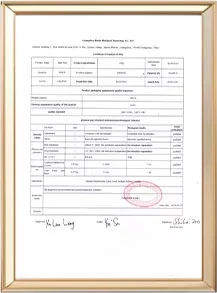
- Documentation fluency. The factory produced GMP and ISO 22716 certificates, CoAs, and stability reports without a chase, which mattered when the brand later approached a distributor.
Lessons for Your Launch
1. Brief with a single clear claim. Do not ask for “everything” — it produces incomparable quotes and a compromised product. 2. State sensory targets explicitly. Viscosity, foam, and scent drive reviews as much as actives do, and they are cheap to specify up front. 3. Use stock packaging early, customize later. Tooling is a commitment that should follow proof, not precede it. 4. Ask for tiered pricing in the first email. You will need the cost curve at month 3, and it costs nothing at month 0. 5. Build marketing content before samples ship. Content is usually the longer lead time of the two. 6. Test with users, not with instinct. Fifteen blind testers cost almost nothing and prevented an expensive scent mistake.
Common Mistakes to Avoid
- Vague briefs. “Make it premium” yields nothing actionable and invites the factory to guess in whichever direction is cheapest.
- Custom tooling too early. It kills speed, locks in cost, and makes discontinuing a weak SKU emotionally harder than it should be.
- No retention plan. Launch traffic without a refill loop burns cash and produces a flat second month.
- Ignoring label compliance until print. Reprinting 5,000 labels because the INCI order was wrong is an avoidable, entirely self-inflicted cost.
- Treating the scaled run as identical to the pilot. Larger batches change mixing and cooling behaviour, so stability needs confirming at the new size.
FAQ
How fast can a Guangdong OEM launch a new shampoo? With a clear brief and stock packaging, sampling in two to four weeks and a pilot launch in roughly two to three months is realistic. Custom tooling, bespoke fragrance, or unusual actives extend that meaningfully.
Should I use custom packaging at launch? Usually no. Stock bottles with a custom label, cap colour, and finish deliver most of the perceived quality at none of the tooling cost or delay. Move to custom moulds once reorder volume justifies amortizing them.
What makes the launch succeed? A single clear claim, sensory targets specified in the brief, content built before stock arrives, and a subscription loop timed to actual product depletion.
When should I request tiered pricing? In the first brief. Quotes at 1,000 / 5,000 / 10,000 units on identical specs show you the cost curve and reveal whether the factory is genuinely equipped to scale with you.
What documentation should I collect at pilot stage? GMP and ISO 22716 certificates, the batch CoA, stability and microbial results, and the finished label proof approved against your destination market. Collecting these at pilot saves weeks when a distributor asks later.
Conclusion & Next Step
A Guangdong OEM launch works best as a staged play: brief tight, sample fast, pilot small on stock packaging, then scale on evidence. Every expensive decision in this story was deferred until data paid for it. Ready to write your brief? Review our OEM buying FAQs or explore Guangdong OEM capabilities on our sister site.